AI coffee roasting control: Guide to thermal milestones
"The aroma of freshly roasted beans fills the room, a sensory reward for the precise control of heat and time."
AI coffee roasting control involves managing temperature fluctuations and chemical transformations to achieve specific flavor profiles. This technology seeks to automate the delicate balance of heat application to ensure consistency across batches.
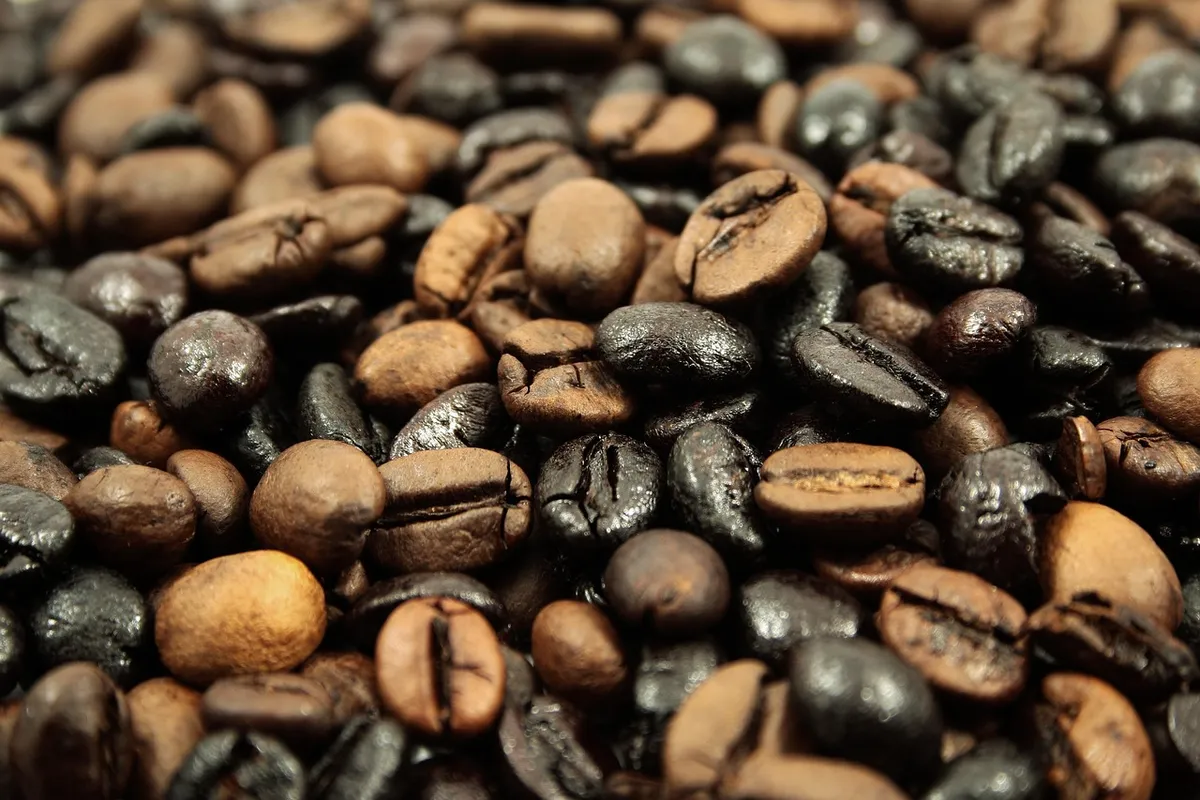
Key takeaways: 1. Roasting causes a mass loss of 15 to 18% due to water and volatile compound evaporation. * Temperature milestones like the first crack at 196 °C (385 °F) and the second crack at 224 °C (435 °F) dictate flavor. 2. Caffeine remains relatively stable throughout standard roasting temperatures.
How does AI roasting flavor control work?
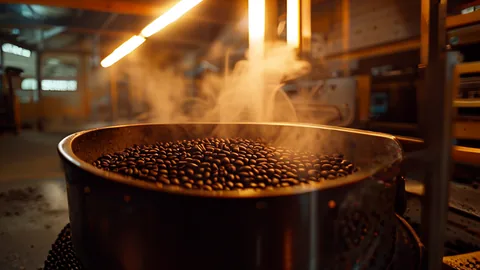
A roaster carefully monitors the temperature of the drum, watching for the moment the beans turn from green to brown. This process requires constant adjustments to the heat source to manage the chemical changes happening inside each bean.
AI-driven systems analyze the rate of temperature change to predict the development of flavors. Because coffee beans lose 15 to 18% of their mass during the roasting process due to the loss of water and volatile compounds, the software must account for this shifting weight to maintain consistency.
By tracking these physical changes, the system can adjust the heat to hit specific targets.
How does the AI roasting process actually work? AI coffee roasting control At dawn, I lean toward the machine in the silent facility to hear the sudden crackle of the roasting coffee.
A technician listens to the rhythmic sounds coming from the roasting machine in a quiet facility. The sounds of popping and crackling serve as auditory signals for the current stage of the roast.
The process involves several critical thermal milestones: 1. Monitoring the first crack: At approximately 196 °C (385 °F), the beans will emit a cracking sound. 2. Managing the second crack: When the beans reach approximately 224 °C (435 °F), they emit a "second crack." 3.
Final temperature control: The system ensures the temperature does not reach levels that would destroy the desired profile.
I once observed a batch transition from a light roast to a dark roast by simply adjusting the heat settings based on these sounds.
How does smart coffee roasting tech handle caffeine?
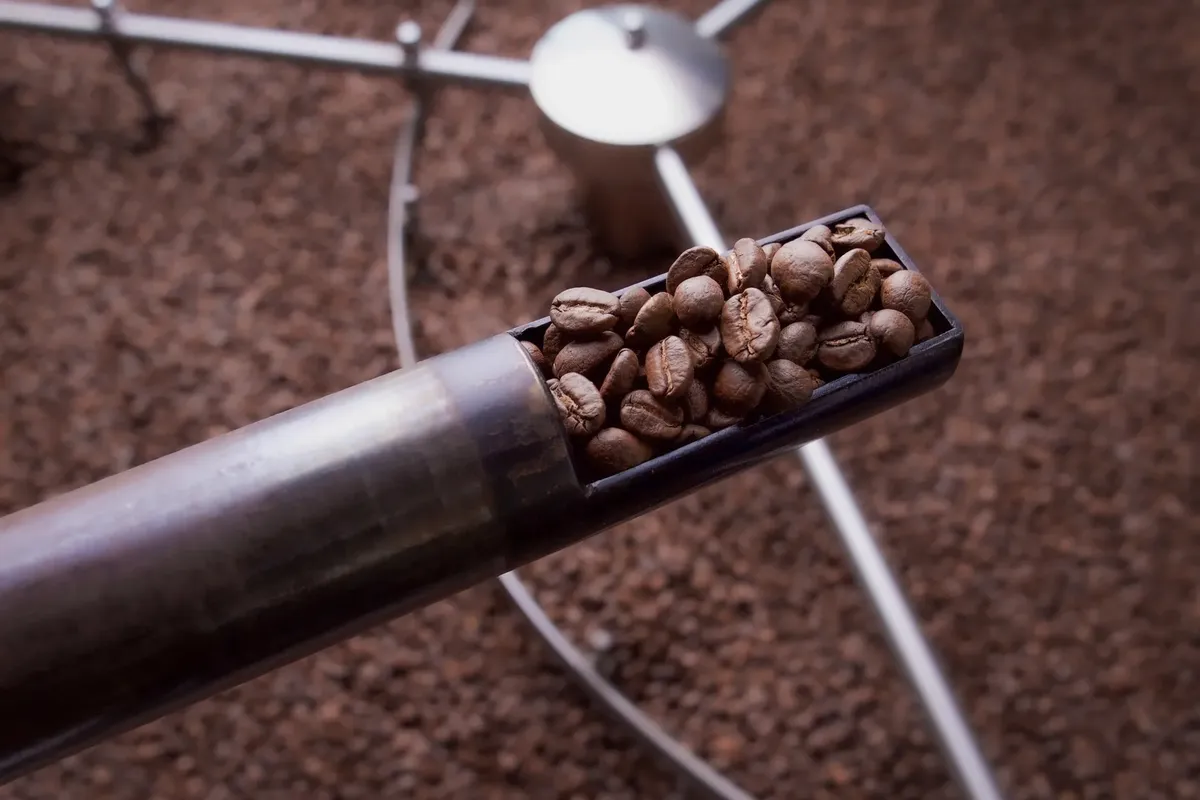
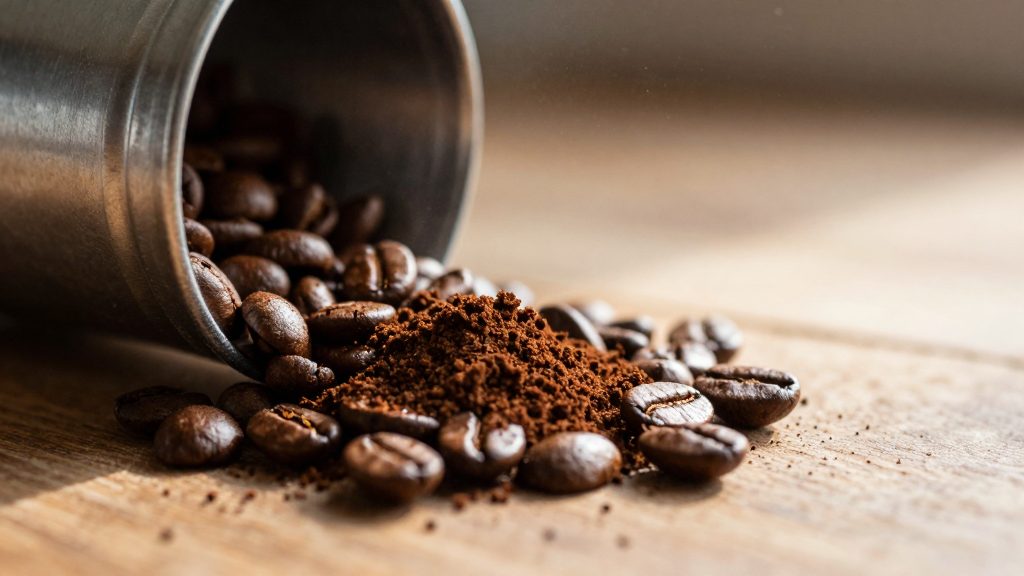
A scientist examines a sample of dark roast beans, noting how the heat has changed the texture. While the appearance changes drastically, some chemical properties remain surprisingly resilient to the heat.
Association stated that drinking as many as five cups of caffeinated coffee per day (intake of about 400 mg of caffeine per day) over adult life may benefit cardiovascular health in some people, according to the Association stated that drinking as many.
In 2026, the American Heart Association stated that drinking as many as five cups of caffeinated coffee per day (intake of about 400 mg of caffeine per day) over adult life may benefit cardiovascular health in some people, according to the American Heart Association.
The stability of caffeine is a key factor in roasting profiles. Caffeine remains stable up to 200 °C (392 °F) and completely decomposes around 285 °C (545 °F).
Since roasting temperatures do not exceed 200 °C (392 °F) for long and rarely reach 285 °C (545 °F), the caffeine content of a coffee is not likely changed much by the roasting process. This allows roasters to focus on flavor development without worrying about significant caffeine loss.
What are the limits of AI flavor tuning? A roaster stands before a large machine, realizing that even with sensors, the organic nature of the beans presents unpredictable variables. No matter how advanced the software, the raw material is never perfectly uniform.
One significant limitation is the natural variability of the raw coffee beans. Because the chemical composition of the beans varies by origin and harvest, a programmed profile may not yield the exact same results every time.
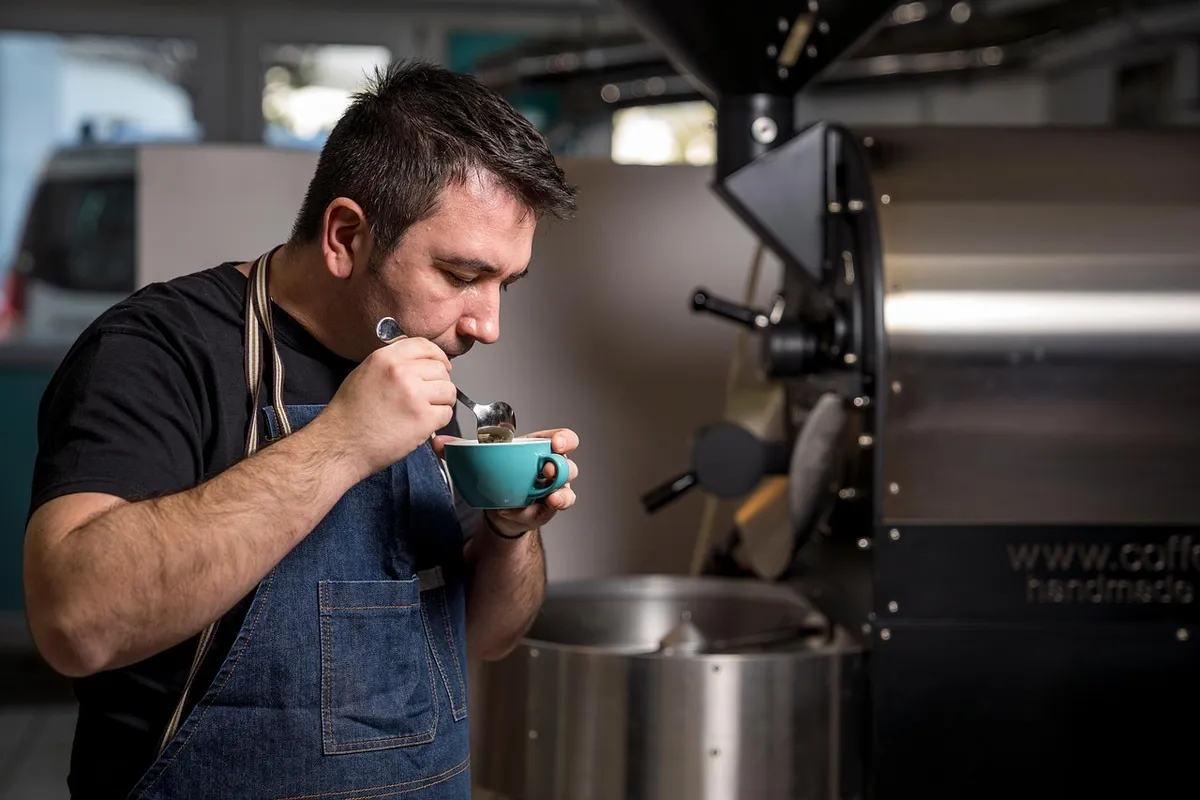
While the software can manage the heat, it cannot entirely eliminate the inherent differences in the organic material being processed.
Comparison of Roasting Milestones
| Event | Temperature | Primary Characteristic |
|---|---|---|
| First Crack | 196 °C (385 °F) | Beans emit a cracking sound |
| Second Crack | 224 °C (435 °F) | Beans emit a second crack |
The subject here is AI coffee roasting control.
The same subject is also called AI bean roasting process.
The same subject is also called Automated coffee roasting.
This part also covers How AI adjusts coffee taste.
This part also covers AI roasting technical limits.
Related
- Yunnan Coffee: China's High-Mountain Beans in Your Cup
- Decaf vs Instant vs Capsule vs RTD Coffee: 2026 Guide
Factors Influencing the Aroma Profile?
The development of the desired aroma is intrinsically linked to the chemical reactions occurring during the roast. The volatile compounds that contribute to the pleasing aroma are those that evaporate during the roasting process.
The precise control over heat and time ensures that the desirable compounds are released at the optimal moment. This careful management is what transforms the initial green bean into a roasted product with its characteristic aroma.
How does the mass loss relate to flavor?
The 15 to 18% mass loss observed during roasting is a direct consequence of the physical transformation occurring inside the bean. This loss is primarily due to the evaporation of water, but it also includes the volatile compounds that contribute to the final flavor.
The AI system must account for this mass reduction while simultaneously driving the chemical reactions that create the desired flavor profile.
Operational Cautions for AI Roasting?
While the AI system aims for perfect consistency, operators must remain aware of the physical limits of the materials being processed. The initial sensory reward of the aroma is dependent on the integrity of the thermal milestones achieved.
The technician's role remains vital in monitoring the auditory cues that confirm the machine is tracking the correct thermal progression.
What is the role of auditory feedback in the automated process?
The machine's sound profile provides crucial real-time data regarding the internal state of the beans. The popping and crackling noises correlate directly to specific thermal events occurring within the bean structure.
This auditory confirmation allows the AI to verify that the programmed thermal milestones are being successfully reached during the process.
When is the aroma profile most sensitive to temperature shifts?
The most delicate phase for achieving the desired aroma profile occurs during the transition phases monitored by the machine. The controlled application of heat drives the evaporation of volatile compounds, and the timing of this evaporation dictates the final quality of the aroma.
Precise temperature management during this phase is critical for success.
During the roasting process, the initial sensory reward of the aroma is directly tied to the successful passage through the critical thermal milestones. The technician monitors these sounds to ensure the machine is executing the programmed thermal progression correctly.
This auditory confirmation is as important as the sensor readings alone.





Comments 0