What are the steps for proper bean preparation?
"The flavor of a cup begins long before the grinder touches the bean, starting instead in the orchards and drying beds where fruit meets the elements."
Understanding how processing shapes the bean is essential for anyone seeking to master the nuances of acidity, body, and aroma.
This guide explores the fundamental differences between natural and washed methods to reveal how the presence or absence of fruit during drying dictates the final flavor profile.
You will learn to distinguish between clean acidity and heavy body, recognize the resource requirements of different methods, and understand the risks of improper drying.
How does the natural method shape flavor?

A farmer spreads harvested cherries across a wide drying patio under the heat of the sun. In this dry-processed method, the coffee bean remains inside the fruit during the entire drying phase, allowing the sugars to migrate into the seed.
According to the International Coffee Organization, daily indicator prices distinguish four groups: Colombian mild arabicas, other mild arabicas, Brazilian and other natural arabicas, and robustas.
This interaction creates a profile often characterized by heavy body and intense, fruity sweetness.
The International Trade Centre describes the washed method as the most common of the three and as often producing the highest quality, while noting that it demands considerable skill and a great deal of water.
This implies that the natural method relies more on environmental control than water management. Because the fruit is left intact, the fermentative qualities of the pulp heavily influence the bean.
The result is a cup that often lacks the sharp, clean acidity of a washed bean but offers a much more complex, wine-like character. This density provides a distinct mouthfeel that sets natural processed coffees apart. The heavy fruit notes are the hallmark of this direct contact.
The fermentation of the fruit pulp directly imparts sweetness and heavy fruit notes to the bean.
What exactly is the washed method? I stand by the pulping machine in the cool morning, which splashes cold water against my skin as the fruit is stripped away.
A worker carefully removes the fruit from the bean using a pulping machine, leaving only the parchment-covered seed to be washed clean of mucilage. This wet-processed approach focuses on clarity, stripping away the fruit to highlight the inherent characteristics of the coffee variety itself.
The result is a bright, clean cup with high acidity.
The International Trade Centre notes the washed method often produces the highest quality through this meticulous cleaning. It requires significant water usage to rinse the beans, making it a resource-intensive choice compared to dry processing.
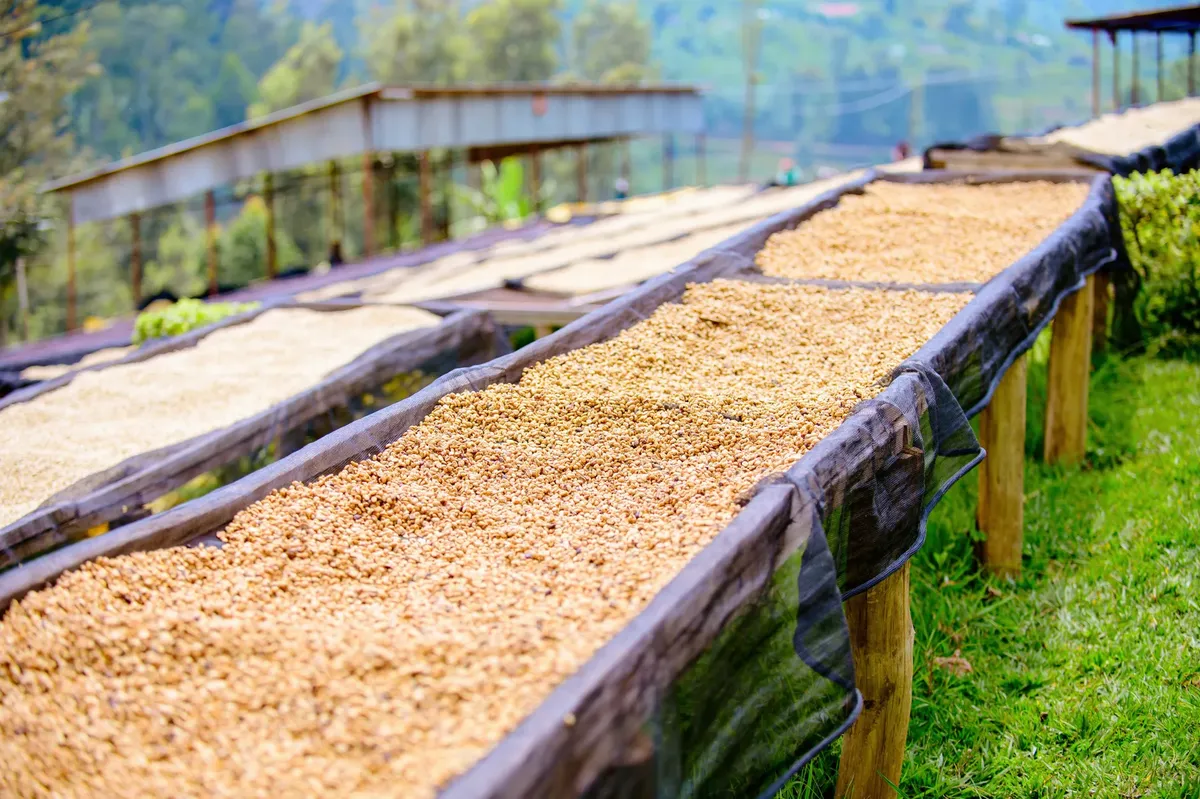
The absence of fruit during drying ensures that the flavor is not masked by fermentation-heavy notes.
The clarity of flavor is the primary benefit of this method. By removing the fruit, the natural acidity of the coffee is accentuated. This makes it a preferred choice for those who enjoy bright, crisp, and tea-like coffee profiles.
This process involves removing the fruit skin and pulp before drying to ensure a clean profile.
Which method changes body and acidity? A taster swirls a bright, citrusy coffee in one hand and a heavy, dark-fruit coffee in the other. The difference in weight and sharpness is a direct result of whether the bean was dried with or without its fruit. Understanding these trade-offs is key to navigating a coffee menu.
| Feature | Natural Method | Washed Method |
|---|---|---|
| Primary Profile | Heavy body and fruitiness | Clean acidity and clarity |
| Resource Need | Low water usage | High water usage |
I often find that choosing between these two depends entirely on whether I want a bright morning pick-me-up or a heavy, dessert-like cup in the afternoon. The natural process emphasizes body, while the washed process emphasizes acidity.
The presence of fruit in the natural process provides a much higher body. In contrast, the washed method provides a cleaner acidity. This fundamental split defines the majority of specialty coffee flavor profiles available to consumers.
The choice between natural and washed processing significantly alters the balance of body and acidity.
How do drying conditions impact quality?
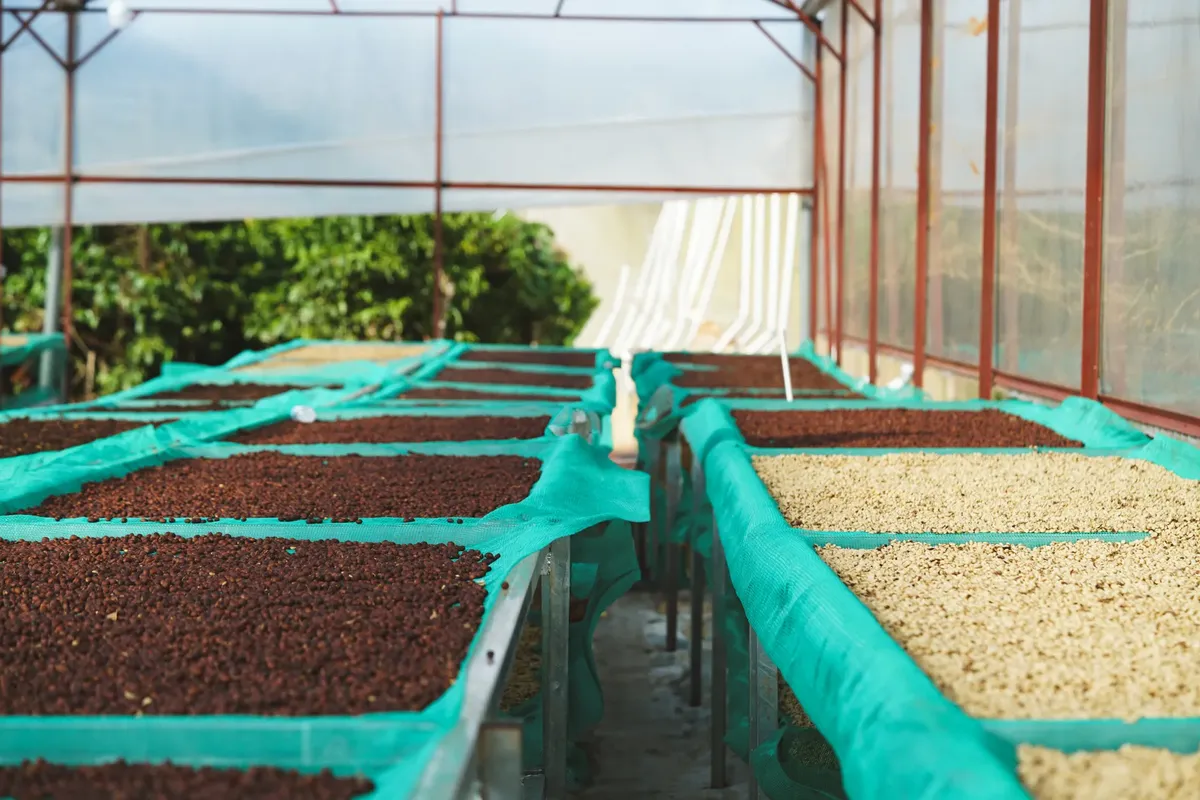
A worker carefully turns the coffee layers on a drying bed to ensure even moisture evaporation. If the temperature rises too high or the air remains too humid, the entire batch can be ruined. Temperature control is the silent architect of coffee quality.

Drying too fast, or with the coffee mass above about 40 °C for parchment and 45 °C for cherry, damages quality and shortens the shelf life of the green coffee, while drying too slowly allows mold and other microbial growth. This delicate balance is required regardless of the chosen method.
If the temperature is not managed, the beans can develop off-flavors or mold. This is especially risky during natural processing where the fruit is still present. Proper drying ensures the flavor remains stable and the shelf life is preserved.
- Monitor moisture levels regularly. 2. Ensure consistent airflow around the beans. 3. Protect the drying beds from direct sunlight.
What are the steps for proper bean preparation?
A technician monitors a moisture meter to ensure the beans have reached the ideal level for storage. Moving from harvest to export involves several critical stages of moisture management. Following a specific sequence helps maintain the integrity of the flavor profile developed during processing.
- Remove the fruit or pulp through either dry or wet processing methods to prepare the seed. 2. Control the drying environment to reach specific moisture levels, such as 14–17 percent for parchment or approximately 13 percent for export. 3. Perform the curing stage, which is the process of preparing the coffee for export after it has been processed.
It is a vital step that happens at a dedicated plant and not long before export. Ensuring the moisture levels are correct prevents spoilage.
In this sequence, the second step is the longest.
Can environmental factors limit processing results?
A sudden rainstorm hits a drying patio, forcing workers to scramble to cover the coffee. Environmental variables like humidity and temperature can act as a ceiling on how much quality a producer can achieve. These factors can change the intended flavor profile overnight.
According to a 2020 International Labour Organization study of five major producing countries, coffee workers earned less than the national average wage, and less than the average agricultural wage, in every country examined.
The ability to control the environment is a major limitation. For example, the natural method is highly dependent on consistent sunlight and low humidity to prevent mold. If the environment is too wet, the sugars in the fruit can lead to undesirable fermentation.
The lack of environmental control can lead to inconsistent batches. While the natural method offers unique flavors, it is more susceptible to these external risks. This makes it harder to achieve a consistent specialty grade compared to more controlled environments.
Humidity and temperature fluctuations can interfere with the consistency of the fermentation process.
- How does the natural method shape flavor?
- What exactly is the washed method?
- Which method changes body and acidity?
Related






Comments 0