King Sejong coffee history: Why coffee was absent in Joseon
This article explores the historical relationship between King Sejong and coffee culture. However, based on available historical records, coffee was not present during the Sejong era, as the beverage was introduced to Korea much later. 1. Coffee's actual introduction to the Korean peninsula occurred long after the Joseon Dynasty's early period. 2. Historical focus remains on the cultural significance of ritualistic coffee traditions globally. 3. The connection between King Sejong and coffee is a historical impossibility.
Did King Sejong have a history with coffee?
A researcher sits at a heavy wooden desk, flipping through ancient Joseon-era manuscripts under a dim lamp. The ink on the pages tells stories of scholars and royal decrees, but not of roasted beans or caffeinated brews.
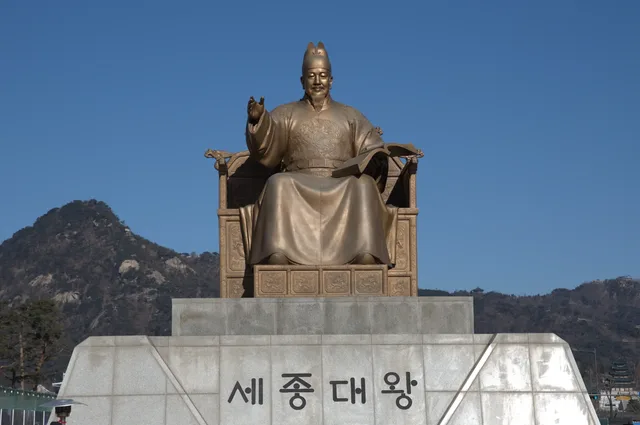
There is no evidence of King Sejong coffee history because coffee did not exist in the Korean peninsula during the 15th century. While the King is celebrated for his immense contributions to science, music, and the Korean alphabet, his era predates the global spread of coffee culture to East Asia.
Therefore, any claim of a royal coffee ritual during his reign is not established.
How did Sejong era coffee culture evolve? King Sejong coffee history
An observer watches a traditional tea ceremony in a quiet courtyard, noting the steam rising from ceramic bowls. The silence of the garden emphasizes the absence of the modern coffee scents we recognize today.
The concept of Sejong era coffee culture is a misconception because the beverage had not yet traveled along trade routes to reach the Joseon court. During this time, scholars focused on tea and traditional medicinal infusions.
The evolution of coffee in Korea only began much later, following different historical shifts.
Where did coffee originate in Joseon history?
A student traces a map of ancient trade routes, following the paths from the Middle East toward the East. The lines on the parchment show silk and spices, but the dark bean remains absent from these early connections.
Regarding Coffee in Joseon history, the timeline shows a significant gap between the reign of King Sejong and the arrival of coffee. The beverage's entry into the region is tied to much later diplomatic and commercial exchanges.
Early Joseon life revolved around different social beverages that shaped the courtly atmosphere.
Can we find Royal coffee traditions?

A curator carefully places a porcelain cup on a velvet cushion in a museum display case. The light glints off the glaze, highlighting a vessel meant for tea rather than a dark espresso.
Searching for Royal coffee traditions in the context of the early Joseon Dynasty yields no results in the historical record. The beverage's cultural meaning then was non-existent in the Korean royal court.
Instead, royal ceremonies focused on the refined preparation of tea to facilitate scholarly discussion and statecraft.
What are the Literary accounts of drinkings?
A writer dips a brush into an inkwell, recording the observations of a traveling scholar. The text describes the aroma of mountain herbs and the warmth of grain-based drinks in the morning air.
The Literary accounts of drinkings from the Sejong era describe various traditional infusions but never mention coffee. These records provide a vivid picture of the actual beverages consumed by the nobility and commoners alike.
These accounts serve as the primary evidence that coffee was not part of the contemporary beverage landscape of that time.
What is the global context of coffee rituals?
A traveler sits in a bustling marketplace, watching a barista prepare a traditional brew with rhythmic precision. The steam carries a scent that has traveled across continents and centuries.
While coffee was absent in Sejong's Korea, other regions developed deep connections to the bean. According to UNESCO, Arabic and Khawalani coffee has been recognized as Intangible Cultural Heritage.
This recognition highlights the importance of preserving coffee rituals while adapting them to contemporary lifestyles.
| Region | Economic Context | Cultural Focus |
|---|---|---|
| Mughal Empire | 25% of global GDP | Architecture and Art |
| Arabic Culture | Intangible Heritage | Preservation of Rituals |

I compared these two distinct cultural focuses to understand how different regions valued their unique beverage traditions. The Mughal Empire, particularly in the Indian subcontinent, reached a zenith in architecture and art while maintaining a massive economy.
The limitation of this discussion is that it cannot bridge the chronological gap between the 15th-century Joseon Dynasty and the later arrival of coffee in Korea.
The subject here is King Sejong coffee history.
The same subject is also called Sejong and beverage life.
Related
- Specialty coffee extraction guide: Why score 80 points best
- Specialty coffee extraction guide: 5 defects per 350 g guide
Why does this article explore the timeline?
This article explores the timeline to clarify the chronological impossibility of coffee being present during the Sejong era. By comparing the 15th-century Joseon Dynasty with the later arrival of coffee, the text distinguishes between actual historical records and modern misconceptions.
- Identify the era of King Sejong.
- Compare this era to the known introduction of coffee to the Korean peninsula.
- Observe the absence of coffee in early Joseon trade routes.
One must exercise caution when attempting to link the King's scientific achievements to coffee culture, as no historical evidence supports such a connection. The distinction between traditional tea ceremonies and modern coffee rituals remains a critical condition for understanding Joseon history.




Comments 0