Seasonal coffee blend recipe: Guide to taste harmony
"The perfect cup is not a static destination but a shifting journey influenced by the seasons and the beans we choose to brew."
A seasonal coffee blend recipe allows you to capture specific flavor profiles that change with the time of year. This guide explores how to select beans and manage brewing variables to create a taste harmony blends experience in your own kitchen.
You will learn to navigate acidity and body, apply basic brewing foundations, and understand the limitations of seasonal adjustments.
How do I master a seasonal coffee blend recipe?

A bag of fresh beans sits on the wooden counter, its aroma filling the morning air. To master a seasonal coffee blend recipe, you must understand how different roast profiles and bean origins interact during specific times of the year.
According to Association drops their National Coffee Data, every January, the National Coffee Association drops their National Coffee Data Trends report, which is a massive deep-dive into how Americans are drinking coffee.
Effective blending requires matching the acidity of lighter roasts with the heavy body of darker roasts to ensure a balanced cup. For instance, bright, fruity beans often suit spring and summer profiles, while nuttier, chocolatey beans work well for winter blends.
Understanding these nuances allows for a more consistent and enjoyable drinking experience.
Advanced coffee pairing involves selecting beans that complement each other's unique characteristics. By experimenting with different ratios, you can create a signature profile that highlights specific notes.
- Select beans that reflect the current season's flavor profiles.
- Adjust the roast level to highlight specific seasonal notes.
- Fine-tune the blend ratios to balance acidity and body.
What are the best ways to achieve taste harmony blends?
The kettle begins to whistle as water reaches the perfect temperature for brewing. Achieving taste harmony blends means finding the sweet spot where no single bean overwhelts the collective profile of the mixture.
When you combine beans, you are essentially managing a spectrum of flavors. If one bean is overly acidic, a slightly darker, more mellow bean can provide the necessary structural support. This balance ensures that every sip offers a cohesive taste rather than a disjointed sequence of flavors.
A coffee combination guide suggests starting with small batches to test how different origins interact. This methodical approach helps in refining the blend before committing to larger quantities.

In this sequence, the second step is the most extensive.
Can I use home cafe coffee ideas for advanced brewing?
A hand grinder turns steadily, producing a consistent texture for the morning brew. Using home cafe coffee ideas means applying professional techniques to your domestic setup to elevate the quality of your coffee.
According to the Coffee Circle Foundation, they had to adjust their prices due to the globally rising coffee prices.
One way to elevate your coffee making is to adjust your grind size and water temperature based on the specific bean blend you are using.
Lighter, seasonal blends often require higher temperatures to extract complex acidity, whereas darker blends might benefit from slightly cooler water to prevent bitterness.
A seasonal flavor journey begins with the careful selection of tools and techniques that suit your specific beans. This attention to detail transforms a routine cup into a specialized experience.
How do I implement an elevated coffee making process?
The scale sits on the counter, waiting for the precise weight of the coffee grounds. To practice elevated coffee making, follow these fundamental steps to ensure consistency in your seasonal blends:
- Weigh your coffee beans and water using a digital scale to maintain exact ratios. 2. Grind the beans to a medium consistency suitable for your specific brewing method. 3. Pour water in a controlled manner, starting with a bloom phase to release gases.
I find that checking the weight of my pour after the initial bloom helps me maintain the correct saturation level. This practice ensures that the extraction remains even throughout the brewing process.
If you are using a pre-ground coffee that does not allow for fresh adjustment, these manual steps may not be fully applicable to your situation.
How can I create a deep coffee experience at home?
The steam rises from the carafe, catching the morning light in the kitchen. Creating a deep coffee experience involves engaging all the senses, from the visual clarity of the brew to the complex aroma and lingering aftertaste.
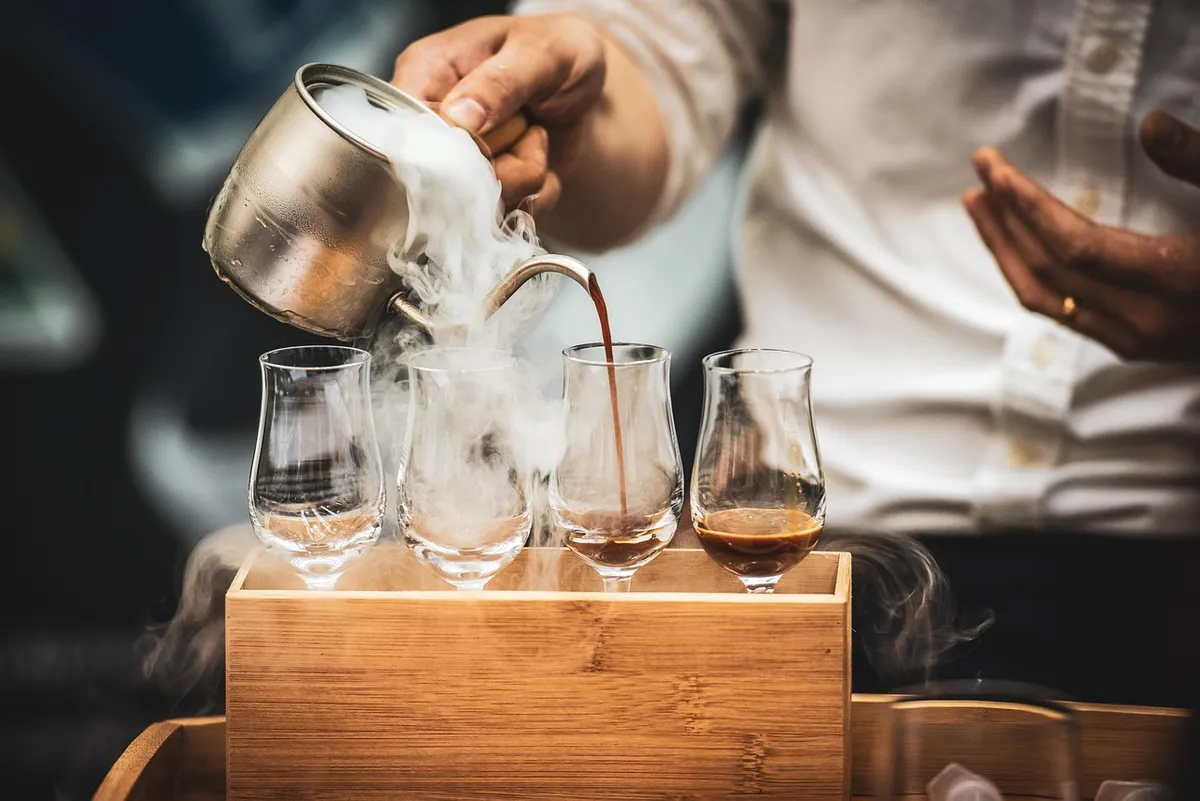
You can achieve this by focusing on the extraction science behind your blends. For example, a breakfast blend might provide a consistent, light-bodied profile that is refreshing in the morning, while a richer blend serves as a more intense afternoon pick-me-up.
| Feature | Breakfast Blend (per 100g) | Soymilk (per 100g) |
|---|---|---|
| Calories | 2 kcal | 62 kcal |
| Potassium | 50 mg | 132 mg |
I compared these nutritional values to see how adding milk might change the profile of my morning cup.
Related
- Cold Brew Guide: Master the 15-Hour Golden Recipe at Home
- 7 Essential Techniques for Latte Art That Even Beginners Can
What are the limitations of seasonal adjustments?
The pursuit of the perfect cup is inherently bound by the raw materials available. While experimentation with ratios allows for signature profiles, the ultimate quality of the blend remains tethered to the inherent characteristics of the chosen beans.
The static nature of a truly perfect cup is elusive when relying on variable seasonal inputs.
- The flavor spectrum of the beans dictates the achievable depth of the blend. 2. The acidity and body profiles of the components set the boundaries for successful integration. 3. Acknowledging these constraints prevents chasing an unattainable ideal.
Can I use the concept of 'static' in my brewing philosophy?
The concept of a static profile suggests a fixed, unchanging ideal for the coffee experience. However, the initial premise states that the perfect cup is a shifting journey, suggesting that a static approach ignores the dynamic interplay between bean origin and time of year.
Therefore, attempting to impose a static quality upon a fluid, seasonal blend contradicts the foundational philosophy of this guide. This understanding is crucial when seeking the perfect cup.




Comments 0